




















Molam World: Connecting One Village to Another
- Last Updated
- Published
- Category
- Culture
Across cultures, music has long been created for different occasions and purposes. Beyond entertainment or offering a sense of release from everyday life, it accompanies celebrations that mark important moments, as well as rituals honoring deities and sacred beings rooted in the beliefs of each community.
The land itself also leaves its mark on the music. Geography, climate and natural resources shape ways of life and the character of communities, while locally available materials find their way into the instruments they create. From one culture to another, these conditions give rise to distinctive sounds and styles of playing, often carrying stories of the lives, traditions and everyday experiences of the people who call these places home.

Look beyond the music playing in shopping malls, on the radio or in pubs, rural music can be found much closer than we think. In the morning, luk-thung and molam drift from neighborhood shops, motorcycle taxi stands and tuk-tuks waiting at the end of the soi. Step into a taxi and you might catch whatever the driver has playing on their favorite radio station.
Many of the people behind these familiar scenes share a common story. They are workers who came to Bangkok from Isan decades ago in search of better economic opportunities and more reliable incomes. With agriculture carrying its own uncertainties and work closer to home limited, growing demand for labor in Bangkok during the 1950s brought increasing numbers of people from the Northeast into the city.

But they did not come empty-handed. Along with them came pieces of home, the familiar flavors and the songs they grew up with. Woven into everyday life, these tastes and melodies offered comfort and kept a sense of home close.
Invented in the northeastern area of Thailand and nearby regions such as Laos, Isan roots music features distinctive instruments such as the khaen and phin, made from bamboo and locally sourced hardwoods. Their melodies often follow a pentatonic, five-note scale that complements the natural character of the instruments, while the vocals are adapted to the Isan-Lao dialect. Together, this distinctive style of playing and singing takes practice and skill to master. Find out more about molam instruments here.

Since then, molam has become very popular, reaching far beyond Isan audiences. Workers from other parts of Thailand found something of themselves in songs about hardship, working to build a better life and love, stories that could resonate with almost anyone. Its lively rhythms, long a defining characteristic of molam, also caught the ears of Bangkok listeners and foreigners hearing the sound for the first time. Its growing popularity eventually led to record labels focusing on molam artists, alongside government-supported projects aimed at preserving the tradition. Today, the sound continues to evolve. A new generation of Thai and international artists blend their music with elements of molam, creating a new soundscape that moves beyond our expectations.
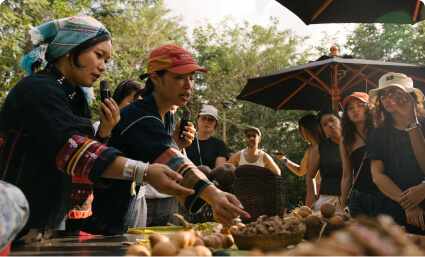
Having been surrounded by these sounds for as long as we can remember, there is a deep connection between molam and the people behind it. That relationship inspired a desire to play a part in keeping this cultural heritage alive, while creating space for it to travel further beyond Thailand. Molam World grew from that intention. Through Haan Molam and Molam Bus by the Jim Thompson Art Center, it brings together different expressions of Isan culture, from food and art to music, inviting people to stop by and get to know the region more closely. For those encountering these sounds for the first time, it offers a way into the ideas and stories carried within the songs, many shaped by the everyday lives of the people behind them. Beyond something new or unfamiliar to the ear, there is a place and a story to discover.

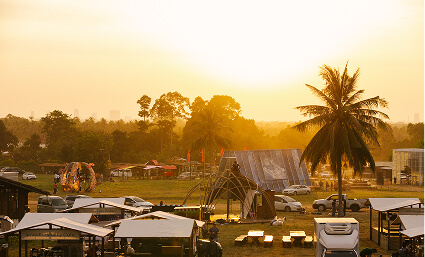
For more than a decade, molam has been part of Wonderfruit, growing into something inseparable to The Fields. As Wonderfruit has evolved into a Field Village, it has become a place where people of different backgrounds and experiences come together, exchanging ideas and inspiration that can spark new forms of creativity. In that same spirit, Molam World continues to expand its boundaries, welcoming more than just local sounds. Bands and artists from all over the world are given a space to express their identities and cultural roots to fellow Wonderers, allowing their music and stories to be seen and heard.


Again this year, Maft Sai, or Nattapon Siangsukon, founder of Zudrangma Records, Studio Lam and Paradise Bangkok Molam International Band, returns as the music curator for this stage. Here, you will meet Lorjhu’ from Madura Island, Indonesia, who brings traditional Madurese music and vocals in their native language into conversation with contemporary sounds. Their work draws inspiration from seafaring legends, local folklore and melodies that reflect the lives and cultural heritage of Madura’s coastal communities. From Surabaya, Indonesian three-piece band Thee Marloes blend soul, jazz and pop with a distinctly Indonesian musical character, while South Korea’s Sansae blur the lines between cultures and genres, weaving the driving bass and drums of rock with the warm psychedelia and hypnotic rhythms of the sitar. Each offers a fresh interpretation of their own culture and those they encounter, opening new ways into traditions that might otherwise feel unfamiliar. In doing so, they allow cultural practices that have long lived within their communities to find new life as the world around them changes.

For anyone who is seeking the beauty of molam sounds, you will find a flavorful dose of them here. From traditional khaen player and living legend Sombat Simla, to temple fair favorite Chamroen Bang Fai Bolan, to contemporary sounds that blend molam elements with a modern twist, such as Paradise Bangkok National Molam Project, Maft Sai & The Isan Clan, Toomturn Molam Group, Rattanakosin Breakin’ Crew and Khontan & The Hymmapan Express.
Explore molam dub acts Zound to Zion and K9 with KC ZuDZaNan, as well as live-looping Isan musical instruments with Jarb Cat. This year, we also welcome Tu Direk, a local legend of ’80s dance, disco and luk thung, whose song ‘Sao Bang Pho’ was played by Jamie XX when he performed in Bangkok.
And there is much more waiting to be explored. Molam World brings together sounds that reach beyond the familiar, offering glimpses into ways of life that may seem different from our own, yet reveal unexpected similarities. These encounters can spark new ideas and forms of creativity, carrying culture forward and allowing it to grow stronger into the future.
