














Our Forests: Growing with the land
- Last Updated
- Published
- Category
- Land
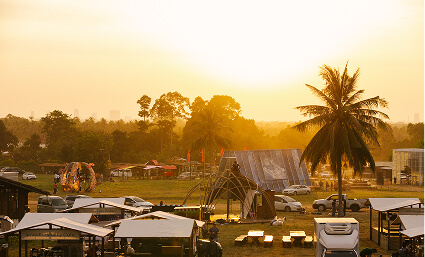
The Fields are a landscape in constant motion, shaped not only by the people who pass through them, but by the life that continues to grow long after we leave.
When our rewilding work began in 2022, much of this land still carried the legacy of industrial pineapple and tapioca farming. Decades of monoculture had left the soil compacted and depleted, with much of its biodiversity stripped away.
So began the journey of restoring the land.
Together with SUGi and Baan Suan Onsorn, we planted native species using the Miyawaki method, an approach that places a diverse mix of native trees closely together, allowing them to compete for light and grow upwards into a dense, layered forest. From there, nature began to set the pace. Saplings grew taller. Open ground became thickets. Shade appeared where there was once bare earth. Birds, bees and other small inhabitants began to find their way in. Since then, more than 100,000 native trees have been planted across The Fields.

But rewilding goes far beyond putting saplings into the ground. In Thai cultural belief, the forest has long been seen as the very foundation of life. It can be a doctor, offering natural remedies. A kitchen, providing nourishment. A friend, offering shelter and companionship. The relationship is neither one-way nor fixed, but living. The more closely we pay attention, the more the forest reveals what it can teach and give in return. Rewilding seeks to rekindle this ancient, symbiotic relationship between nature and people, bringing back native species that have sustained local livelihoods and traditional medicine for generations.
What began with one forest has since spread across The Fields. Different species, planting approaches and traditions have taken root, each creating a landscape with a character of its own.
Ancestral Forest
Walk into Ancestral Forest today and it can be difficult to imagine how young it really is.
This is where our rewilding story first took root. In 2022, the first saplings were planted with SUGi and Baan Suan Onsorn using the Miyawaki method. Four years later, they have grown into a dense, abundant pocket of life.
Follow its winding paths and the forest reveals itself gradually. Native stingless bees have made homes among the trees, while Thai herbs and medicinal plants flourish beneath the canopy. Art appears between branches and sound drifts through the vegetation from Forest Stage. Nature-inspired workshops and installations offer reasons to slow down, look a little closer and experience the landscape from within.
What began as an effort to restore biodiversity has become a place where nature, art, knowledge and people coexist. As the trees have grown, so has the world around them.

Yang Na Forest
Elsewhere, the forest opens up.
Yang Na Forest is a young woodland shaped with landscape architects TK Studio as a living tribute to our Mother Tree. Here, Yang Na saplings are gradually transforming the landscape, bringing natural shade and new habitats as biodiversity returns.
As the trees grow taller and their canopies spread, crown shyness may begin to emerge, a natural phenomenon where upper branches leave gentle channels of light between them without touching. It is a small but beautiful expression of how trees can grow together while holding space of their own.
As the canopy takes shape, more shade gathers below, creating trails and quiet pockets for people to wander, gather and linger among the trees.

Medicinal Plant Village
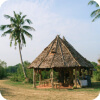
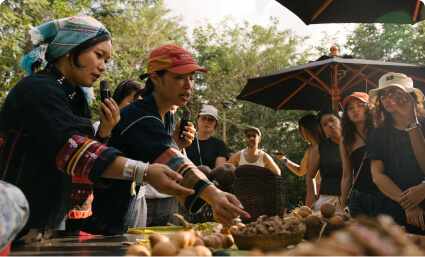
The relationship between people and forests has long been part of everyday life. Tucked within Ancestral Forest, Medicinal Plant Village brings this connection closer through food, medicine and well-being.
More than 30 plant varieties grow around six wooden huts, drawing from generations of Thai medicinal knowledge alongside contemporary healing practices. Wander through the leafy garden and you’ll find native herbs traditionally used to support digestion and immunity, species valued for their antibacterial properties and aromatic varieties used in natural remedies.
Here, knowledge lives among the plants. Each carries more than meets the eye, with stories, everyday uses and time-honored wisdom passed down through generations.

Suan Som Rom
Then there is a forest shaped by centuries of human hands.
Suan Som Rom draws from the Thai orchard-garden tradition, where fruit trees, shade trees, herbs and edible plants grow together in lush, overlapping layers.
Across this young forest, 22,781 trees spanning 123 native species have taken root, from tamarind and jackfruit to moringa and banana. As their leafy canopies spread and intertwine, they mirror the layered structure of a natural forest, creating a rich polyculture where plants coexist and support one another. Together, they cool the air, retain moisture in the soil and offer habitat for birds and insects.
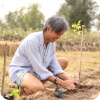
This year, many more hands have become part of that story. Our teams have planted alongside friends, families and the wider community. More than ecological restoration, Suan Som Rom carries forward Thai agricultural knowledge shaped by centuries of human tending.

Growing with the land
Planting a tree can take a moment. Growing a forest unfolds over years. Seasons of rain and heat pass. Roots deepen, canopies meet, insects find their way in, and shade gathers where there was once bare ground. As the landscape changes, we evolve with it.
What began as an effort to restore the land is becoming a way of living alongside it. Paths move between trees. Nature-inspired workshops draw from what grows nearby. Art and architecture have become part of this evolving relationship. The landscape is no longer simply something to build upon, but something that increasingly guides what happens within it.
This ongoing curiosity about art and the land has shaped collaborations across The Fields. Within Ancestral Forest, Pinaree Sanpitak’s Gathering Tables Wonderfruit creates a place where art, nature, and community come together, while the Steam Hut draws on traditional herbal steam as a communal space to restore nestled among nature. Art appears more unexpectedly through Dusadee Huntrakul’s For Going Out or Gardening, where enchanted brass forms emerge between branches and rocks, blurring the everyday with the magical. This year, another layer takes shape with Isabel and Alfredo Aquilizan’s How Long After the Sunset Until It Gets Dark, joining a forest that is itself still growing.
The conversation continues elsewhere across The Fields. Sanitas Studio’s Mindfulness Amidst Changes catches the world around it in mirrored fragments, changing with the vegetation, light and people passing through, while Ab Rogers’ structures have evolved alongside the ways The Fields are inhabited. At Forest Stage, attention turns from what can be seen to what can be heard, as Nick Dwyer’s documentary The Insect Musicians explores the thousand-year Japanese tradition of listening to insects as music. Together, these encounters offer different ways into the landscape, through gathering, healing, reflection, sound or simply noticing something that might otherwise pass unseen.

As planting continues, that relationship will keep evolving. Forests will grow taller, new pockets of shade will emerge and the experience of The Fields will change with them. Four years after rewilding began, the work is no longer only about restoring what was lost. It is about learning to grow with what is here, allowing the land itself to play a part in shaping what The Fields becomes next.

